
Superstitions: Uncovering their stories
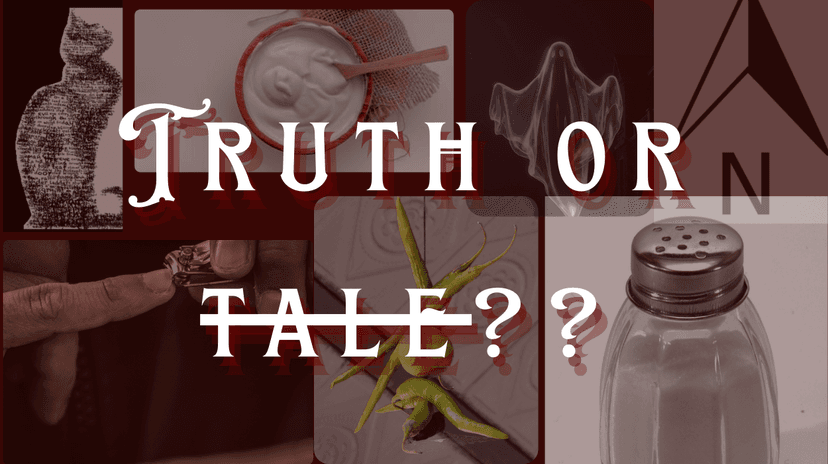
Superstitions have always been a part of our lives, our history, and our traditions. They are defined as beliefs that do not have any scientific explanation. But is this true for all those we have labelled as superstitions?
We grew up being warned by our parents and our grandparents not to do specific things, for example, if we ever sneezed before going out, we were told to sit down, drink some water and then leave. Or twitching a specific eye means good luck. When asked why, we were not always given a clear answer. But there are some superstitions that do have a reason behind them. Here are a few such superstitions that have been justified
1. Cutting nails after sunset:
When I was young, I would often forget to cut my nails. When I tried to cut my nails in the evening, my parents always told me to cut them the next morning, as the sun had already set.
People were advised not to cut their nails after sunset, as it was difficult to see in the dark due to the lack of electricity. Hence, they could accidentally injure themselves.
2. Eating Dahi Shakar:
Before attending an important task like an exam or a competition, we were often fed a mixture of curd and sugar (“Dahi Shakar”) for good luck, but there is a scientific reason behind this. Curd cools the stomach, and the sugar provides glucose, which gives instant energy. Together, they help us stay calm and focused on the task.
3. Tulasi leaves must be swallowed:
We were often told to swallow tulasi leaves instead of chewing them. The reason for this is that tulasi leaves contain small amounts of arsenic, which can be harmful to teeth. Hence, swallowing them reduces the risk of damage.
4. Women during their menstrual cycle
In many households, women are often restricted from doing household work. They are not allowed to touch anything and are confined to a room where food is brought to them. But it wasn’t always like this previously. Women were in pain and very weak, hence they were prevented from doing any work so they could rest.
Women during their periods were told not to touch pickles as they might “spoil” them. But the real reason is to prevent them from eating pickles, which generates heat in the body and, in turn, increases pain during periods. Their original intentions were misinterpreted and passed down as restrictions to future generations.
5. Passing salt hand to hand
People avoided passing salt directly from one hand to another; they believed it would cause conflicts. Even though there is no scientific reason behind it, in astrology it is believed that salt can absorb negative energy and passing it hand to hand can transfer this energy to others, hence causing conflicts.
6. Ghosts in Peepal tree:
People strongly believed that ghosts resided in the peepal tree, and hence it was dangerous to stay under them at night. The reason behind this was very simple and logical. Not only the peepal tree, but all trees release large amounts of carbon dioxide during nighttime, which is not good for health.
7. Do not sleep with your head towards the north direction:
We are always advised not to sleep with our heads pointing in the north direction. According to Indian culture, it is said that Lord Yama Dharma Raja (the Hindu god of death and justice) is associated with the south. So when you sleep with your head pointing towards the north direction, your feet are pointing towards the south, which is disrespectful to the God of Death. But there is some scientific reason behind this. According to Vastu Shastra (Ancient Indian Architecture and Design system), the human body is like a magnet with the head as the north pole. Sleeping with your head towards the north causes a repulsive force, which can lead to sleep disturbances and health problems.
Superstitions often instil fear in people as they deal with death, ghosts and whatnot. As the saying goes, fear spreads like wildfire. Even though superstitions were created for our well-being and were based on the situations faced during that time, it was not easy to make people understand them. Hence, they made them sound more alarming and frightful.
Even though many superstitions have their reasons, a few of them are baseless, such as the itching of your hand means you will gain money or that bumping heads only once grows horns. Superstitions have been wrongly interpreted and made to feel like restrictions. If we don't want the same to happen to our future generations, we must understand the reasons behind them, their origin, and interpret them correctly.
Sources:
https://timesofindia.indiatimes.com/readersblog/changingminds/science-superstition-10521/
Published on:
3 November 2025