
The Yelpification of Art
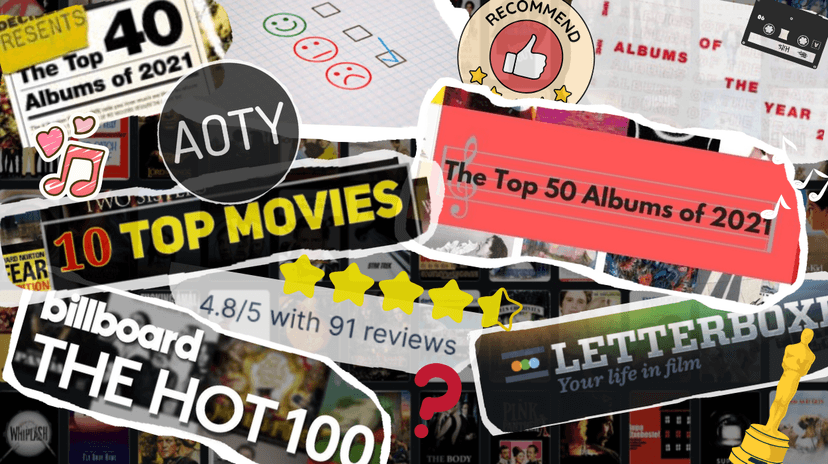
When did this happen? When did we start treating albums and films more like a cricket match? When did a rating on a website become more important than how a piece of art actually makes us feel?
We’ve all been through it. The struggle to always find the best movie to watch or the best music to hear. Whether the newest Superman movie really deserves a 7/10 or the newest Taylor Swift album is truly a 9/10. But when was the last time someone just talked about how that movie made them feel, without a number attached to it? It seems we’ve traded in our personal connection to art for a scorecard.
These cataloging websites that allow you to attach a number to the art have always existed, either in the form of internet forums or popular magazines that put out lists of the best movies or albums that came out in that year. Letterboxd, a popular movie cataloging app, is probably the best example for this. It turns every film that you’ve watched into a star rating in your digital library. Your taste isn’t the same anymore, it’s curated and performed for people on the internet to see. It’s your own highlight reel to show others how ‘cultured’ you are. For music, you have sites like RateYourMusic(RYM) and Album of the Year(AOTY). They feel like giant sprawling databases where every song is pinned down, cataloged and given a final, unforgiving score presented as an objective fact.
Before, you might have heard a new album and just listened to it. Now, the first step is to check its RYM score. If it’s below a 4/5, is it even worth your time? It's even worse with movies. How do you pick what to watch? You open Letterboxd, scroll through the highest-rated films and pick one with a shiny number. Both platforms train us to look for the big, bold number that gets the point across in less than a second. It’s easy and efficient. And it’s killing our curiosity.
It’s much, much harder to be vulnerable than it is to give a score. It takes real courage to say, “This movie makes me feel nostalgic for a childhood I never had”. It’s so much easier to just say, “8.3/10”. It takes emotional work to admit what someone really feels about the art but it’s safer to just put a number tag on it and move on. These numeric systems give us an out. They let us feel like we’ve engaged with a piece of art without actually doing the messy, human work of figuring out what it means to us. We hide behind the numbers.
This obsession with numbers creates toxicity in online communities. You’ll find gatekeepers who dismiss an entire genre of art because they don’t score well on average. They’ve decided what’s “good” based on a spreadsheet, not their senses. You’ll see users giving contrarian takes on popular movies/albums just to stand out. It’s not about an honest reaction, it’s about crafting an online persona. This kind of intellectual posturing gets more respect than a simple, genuine emotional reaction.
I, too, was a stats-obsessed movie and music cataloger. I found myself caught between the “Top 100 Albums of All Time” and “Essential Cinema” lists. I felt this pressure to consume the “objectively right” things, to check them off my list so that I could prove I was a serious fan. I stopped watching movies and listening to music for myself. I was doing it to optimize my stats. My viewing diary wasn’t a personal journal, it was a resume I was building for strangers online.
So what’s the answer? What if we stopped putting a number on every single thing we experience? What if we discussed movies by talking about the questions they make us ask ourselves? Personally, I’m done with stars and decimals. I’ll start my own rating system. From now on, every piece of media that I consume would be on a scale from “I will deny having seen/heard this if ever questioned” to “I will now make this my entire personality for the next six months”.
Published on:
3 November 2025